
Dental Consultation
A full read on your teeth, gums, bite, and existing dental work — supported by digital imaging when it changes the plan.
- Comprehensive Assessment
- Digital Imaging When Needed
- Personalized Treatment Plan
- Transparent Recommendations
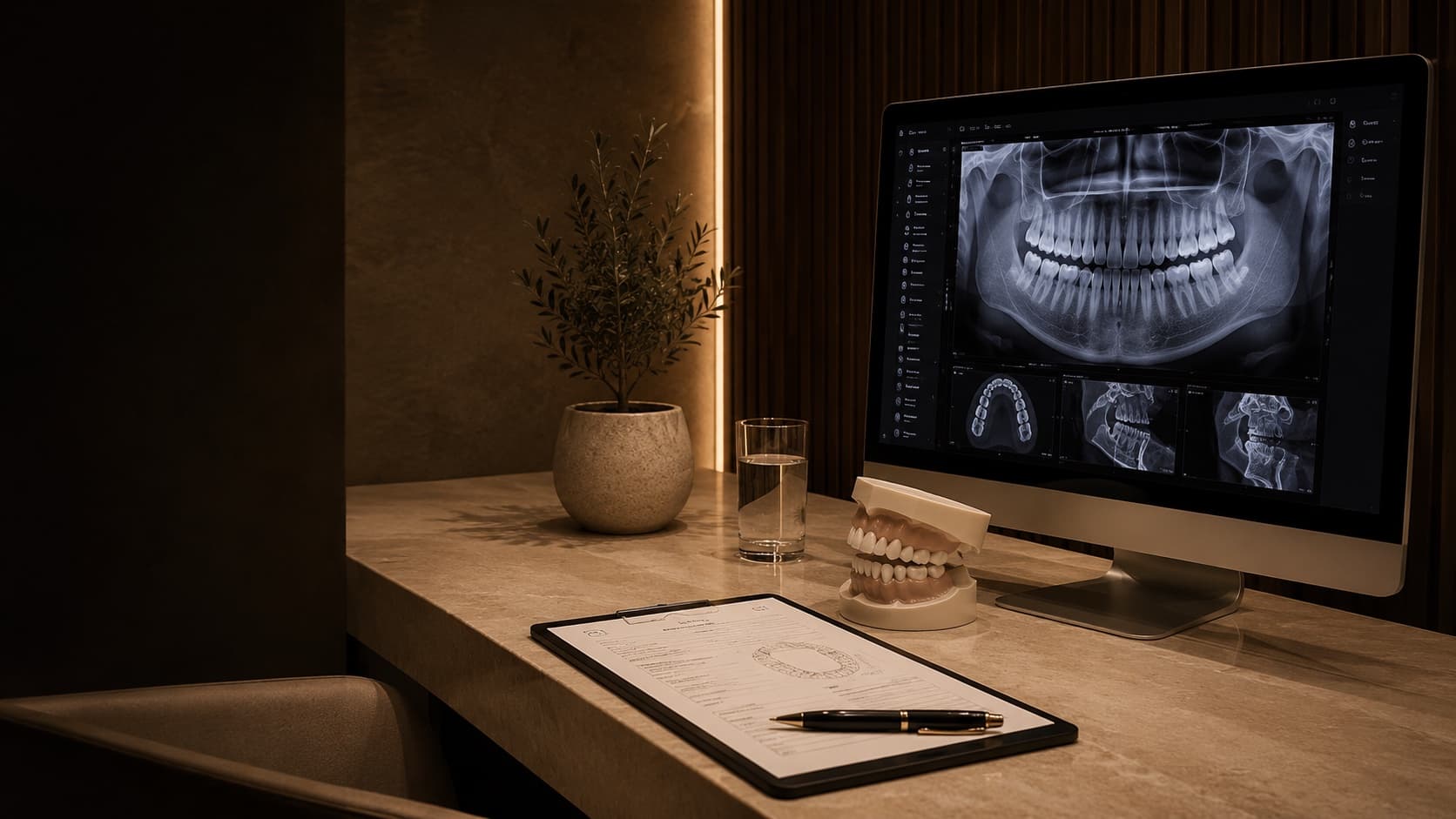
When a consultation makes sense.
A consultation is the right starting point whenever something has changed — a new symptom, a piece of dental work that feels off, or a goal you want to plan around.
- First visit to Madeel, or first dental visit in a year or more
- New sensitivity, pain, or bleeding gums
- A filling, crown, bridge, or implant that feels different
- Planning cosmetic work — whitening, veneers, orthodontics
- A second opinion before a major procedure
- Routine six-month check to catch problems early
Three consultation formats.
Tap a treatment for what it's used for, how it's planned, and how it's kept comfortable.
- Best for
- First visit, routine six-month check, or a new symptom
- Planning
- Visual examination; digital X-rays added if indicated
- Comfort
- Non-invasive · No anesthetic required
Ask about general consultationPatient benefits- Establishes a baseline record of your oral health.
- Catches early decay, wear, and gum issues before they become urgent.
- Reviews existing fillings, crowns, and bridges for damage or decay.
- Screens for bite problems, TMJ issues, and grinding-related wear.
- Produces a clear written plan if any treatment is needed.
- Best for
- Complex cases — root canals, implants, severe gum disease, orthodontic planning
- Planning
- CBCT 3D imaging or panoramic OPG when bone or nerve detail is needed
- Comfort
- Non-invasive · No anesthetic required
Ask about specialist consultationPatient benefits- Deeper expertise for complex root canal, gum, implant, or alignment issues.
- CBCT 3D imaging available the same visit when needed.
- Coordinated planning between your general dentist and the specialist.
- Conservative philosophy — natural teeth preserved whenever possible.
- Clear breakdown of treatment options, timeline, and expected outcomes.
- Best for
- Implant planning, orthodontic planning, complex cases, suspected fractures
- Planning
- Imaging selected based on the clinical question — not by default
- Comfort
- Non-invasive · No anesthetic required
Ask about digital evaluationPatient benefits- CBCT 3D scans show bone density, nerve position, and sinus anatomy.
- Intraoral scans replace messy impression trays.
- Digital records can be shared across general and specialist visits.
- Imaging is shown on a chairside monitor — you see what the dentist sees.
- Treatment plans become more predictable and less invasive.
Planned with precision. Performed with care.
Every consultation starts with what you came in for: a symptom, a goal, or a routine check. From there, the dentist examines the whole mouth, not just the area of concern. If digital imaging will add information — a CBCT for a suspected fracture, a panoramic for wisdom teeth, an intraoral scan for cosmetic planning — it's done the same visit. Findings are reviewed with you on a monitor before recommendations are made.
Whole-mouth examination
Teeth, restorations, gums, bite alignment, jaw joints, and soft tissue — checked in one sitting rather than treated as separate problems.
Digital imaging when it changes the plan
Digital X-rays, panoramic OPG, or CBCT 3D scans are used when they add information the visual exam can't — not by default.
Findings shown, not just described
Images appear on a chairside monitor. You see what the dentist sees before any treatment is recommended.
Conservative-first planning
Treatment plans favour preserving natural tooth structure and start with the least invasive option that solves the problem.
What to expect, step by step.
- 01
Conversation about what brought you in, dental history, and any current symptoms.
- 02
Examination of teeth, gums, bite, jaw joints, and soft tissue.
- 03
Digital X-rays, panoramic OPG, intraoral scan, or CBCT — only when clinically useful.
- 04
Findings reviewed with you on a chairside monitor.
- 05
Treatment options explained, with cost and timeline for each.
- 06
Written plan provided; next visit booked if treatment is needed.
Why a structured consultation matters.
Most dental problems develop quietly. A proper consultation finds them early, when treatment is smaller, cheaper, and faster — and produces a written plan you can act on now or later.
- Catches cavities, gum disease, and bite problems while they're still simple to fix.
- Builds a single record of your dental history that follows you through every future treatment.
- Replaces guesswork with images you can see and a written plan you can take home.
- Coordinates general dentistry and specialist care under one roof and one record.
- Gives you the information needed to decide on treatment without pressure.
Not sure which treatment you need? Talk to a specialist on WhatsApp →
Common questions.
Direct answers to the questions patients ask before booking — pain, sedation, recovery, and the steps from consultation to result.
Plan for a single visit. Time varies depending on whether imaging is needed, but you'll leave the same day with findings explained and a written plan if treatment is recommended.
No. Digital X-rays are taken when the examination raises a question they can answer — not by default. A routine recheck on a healthy mouth may need none.
A general consultation covers the whole mouth and handles routine care. A specialist consultation is a focused evaluation for one specific issue — a root canal, an implant, severe gum disease, or orthodontic planning.
No. The output of a consultation is a written plan and an explanation of options. Whether and when you proceed is your decision.
Every six months for most patients. Every three to four months if you have gum disease, implants, or high plaque buildup. Your dentist will recommend a schedule based on your mouth.
Yes, and it helps. X-rays, treatment history, and any imaging from previous providers give us context and avoid duplicate scans.
Yes. CBCT uses focused 3D imaging with significantly less radiation than a medical CT scan, and is only taken when it will change the treatment plan.
Yes. Consultations are available for children, teenagers, adults, and seniors. Paediatric-specific care is handled by our paediatric service.
The next step is a conversation.
Send a message, share what's going on, and we'll take it from there.
Prefer to call? +971 50 177 9179