
Gum Treatment
Care for bleeding gums, recession, gummy smile and uneven gum tone — assessed properly and treated to last.
- Comprehensive Assessment
- Digital Imaging When Needed
- Personalized Treatment Plan
- Transparent Recommendations
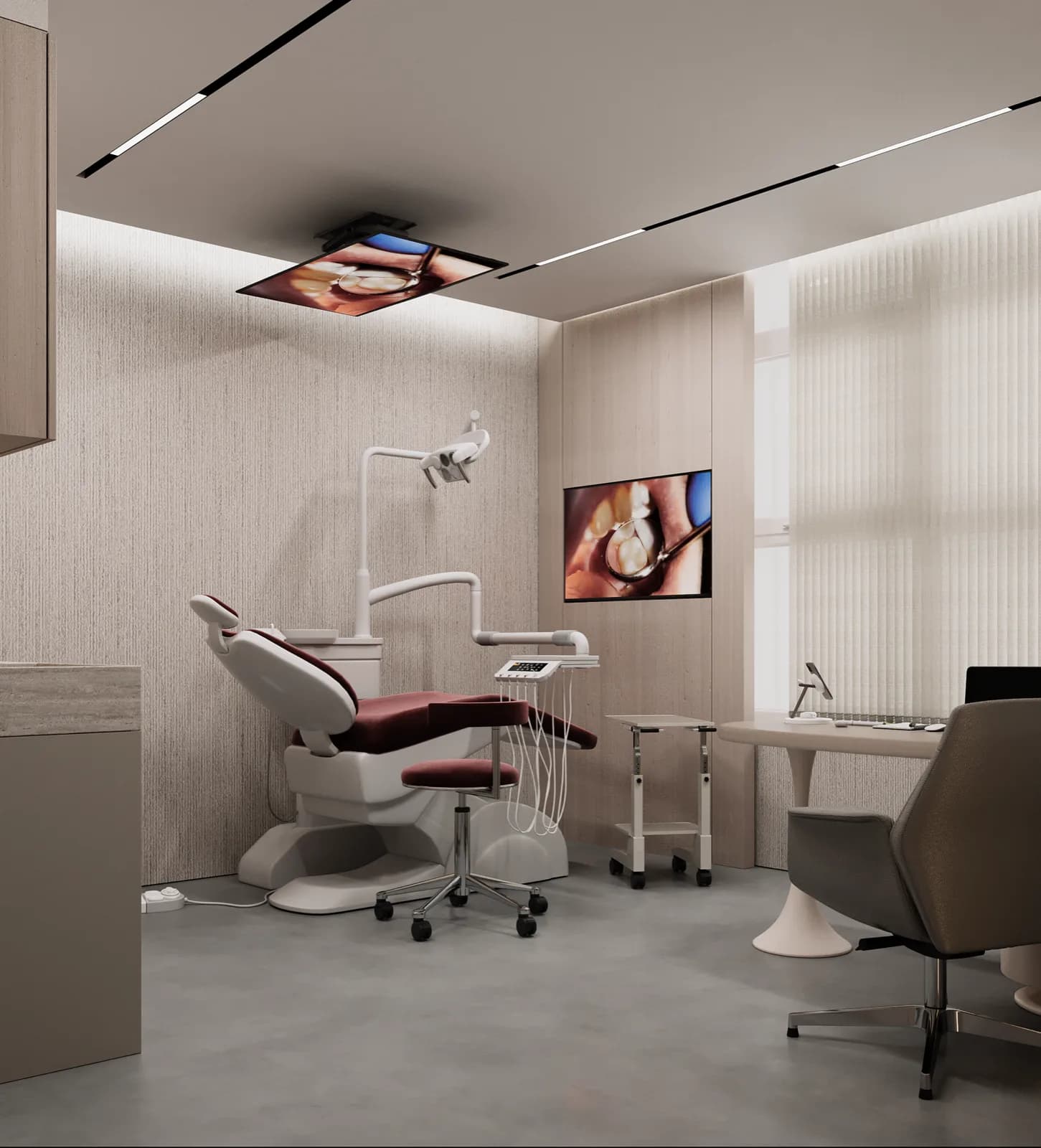
When to see a periodontist.
Gums show what is happening underneath. Bleeding when you brush, gums pulling back from the teeth, dark patches, or a smile that shows too much gum are all reasons to be seen. Most cases respond well when treated early.
- Gums that bleed when brushing or flossing
- Swollen, tender or sensitive gum tissue
- Gums that have receded and exposed the tooth root
- Sensitivity to hot or cold along the gum line
- A smile that shows excessive gum above the teeth
- Dark or uneven gum pigmentation
Four gum treatments.
Tap a treatment for what it's used for, how it's planned, and how it's kept comfortable.
- Best for
- Receding gums, exposed roots, root sensitivity, thin gum biotype
- Planning
- Periodontal exam, photos and measurements; CBCT if bone loss is suspected
- Comfort
- Local anesthesia; laughing gas on request
Ask about gum grafting for recessionPatient benefits- Covers exposed roots and reduces sensitivity.
- Thickens gum tissue to resist future recession.
- Protects against root decay.
- Improves the appearance of long-looking teeth.
- Best for
- Dark or uneven gum pigmentation, no active gum disease
- Planning
- Periodontal check and photo records before treatment
- Comfort
- Topical and local anesthetic; the laser itself is well tolerated
Ask about laser gum depigmentationPatient benefits- Even, natural pink gum tone.
- Single session for most patients.
- Minimal bleeding compared to scalpel methods.
- Stable result with good oral hygiene.
- Best for
- Excessive gum display, uneven gum margins, short-looking teeth
- Planning
- Smile photos, gum measurements, bite analysis to identify the underlying cause
- Comfort
- Local anesthesia; laughing gas on request
Ask about gummy smile correctionPatient benefits- Better tooth-to-gum proportion when smiling.
- Smoother, more symmetrical gum line.
- Result visible immediately after healing.
- Easier to keep gums clean once contour is restored.
- Best for
- Gums that bleed, deepened pockets, early to moderate periodontitis
- Planning
- Pocket charting, bleeding index, X-rays to check bone levels
- Comfort
- Local anesthesia for deeper pockets; lighter cases need none
Ask about treatment for gum diseasePatient benefits- Stops bleeding and inflammation.
- Closes gum pockets and protects underlying bone.
- Reduces bad breath linked to gum infection.
- Lowers the risk of tooth mobility and loss.
Planned with precision. Performed with care.
We treat gums conservatively. That means measuring before cutting, using lasers and microsurgical techniques where they genuinely improve the outcome, and matching graft type to recession pattern rather than defaulting to one technique. Your X-rays and pocket charts stay in your file so we can track changes over years, not just one visit.
Periodontal screening
We measure pocket depths around each tooth, check for bleeding, and review your X-rays before recommending anything.
Laser where it fits
Diode laser for depigmentation and some soft-tissue contouring — less bleeding, faster healing than a scalpel in suitable cases.
Microsurgical grafting
For recession, we use connective tissue, free gingival or pedicle grafts depending on the site and your tissue volume.
Maintenance built in
Gum treatment only holds if it is maintained. We schedule follow-ups and hygiene visits to keep the result stable.
What to expect, step by step.
- 01
Periodontal exam — pocket depths, bleeding points, recession measurements, review of recent X-rays.
- 02
Diagnosis and plan — which teeth need treatment, which procedure fits, what to expect.
- 03
Local anesthesia for the area being treated; laughing gas if you prefer.
- 04
Treatment — scaling and root planing, laser depigmentation, gum graft or recontouring depending on the case.
- 05
Sutures or protective dressing where needed; post-care instructions in writing.
- 06
Follow-up at 1–2 weeks, then ongoing periodontal maintenance.
Why gum care matters early.
Gums recede slowly and painlessly. By the time a tooth looks long or feels sensitive, bone has often been lost behind the scenes. Treating gum disease and recession early is almost always simpler and less invasive than treating it late.
- Stops bleeding and inflammation before it progresses to bone loss.
- Covers exposed roots to reduce sensitivity and decay risk.
- Restores an even gum line and tooth-to-gum proportion.
- Lightens dark gum pigmentation for a more uniform smile.
- Preserves the bone and tissue that hold your teeth in place.
Not sure which treatment you need? Talk to a specialist on WhatsApp →
Common questions.
Direct answers to the questions patients ask before booking — pain, sedation, recovery, and the steps from consultation to result.
Bleeding gums are a sign of inflammation, usually from plaque buildup at the gum line. It is not normal, and it is also not difficult to treat in the early stages. Book a periodontal check before it progresses to bone loss.
No. Once gum tissue has receded, it does not regrow. A gum graft is the standard way to cover the exposed root and protect the area from further loss.
Results are stable for years in most patients. Pigmentation can return slowly over time, especially in patients with genetically darker gums, but a brief touch-up is straightforward.
The procedure itself is done under local anesthesia, so you will not feel it. The donor site on the palate is usually the area that feels sore for a few days. Most patients manage with regular pain relief and soft foods.
It depends on the cause. If the issue was excess gum tissue, recontouring is stable. If the underlying cause is jaw position or an over-active upper lip, recontouring alone may relapse — we will tell you upfront if that applies to you.
Most people return to normal routine the next day. Soft foods for 1–2 weeks. Sutures are usually removed at 10–14 days. Full healing of the soft tissue takes a few months.
Not if we catch it early enough. Gingivitis is reversible. Early periodontitis is treatable and maintainable. Advanced cases need more involved care. The first step is a proper periodontal exam so we know where you stand.
The next step is a conversation.
Send a message, share what's going on, and we'll take it from there.
Prefer to call? +971 50 177 9179