
Pediatric Dentistry
Gentle dentistry for infants, children, and teens — prevention first, treatment when needed.
- Comprehensive Assessment
- Digital Imaging When Needed
- Personalized Treatment Plan
- Transparent Recommendations
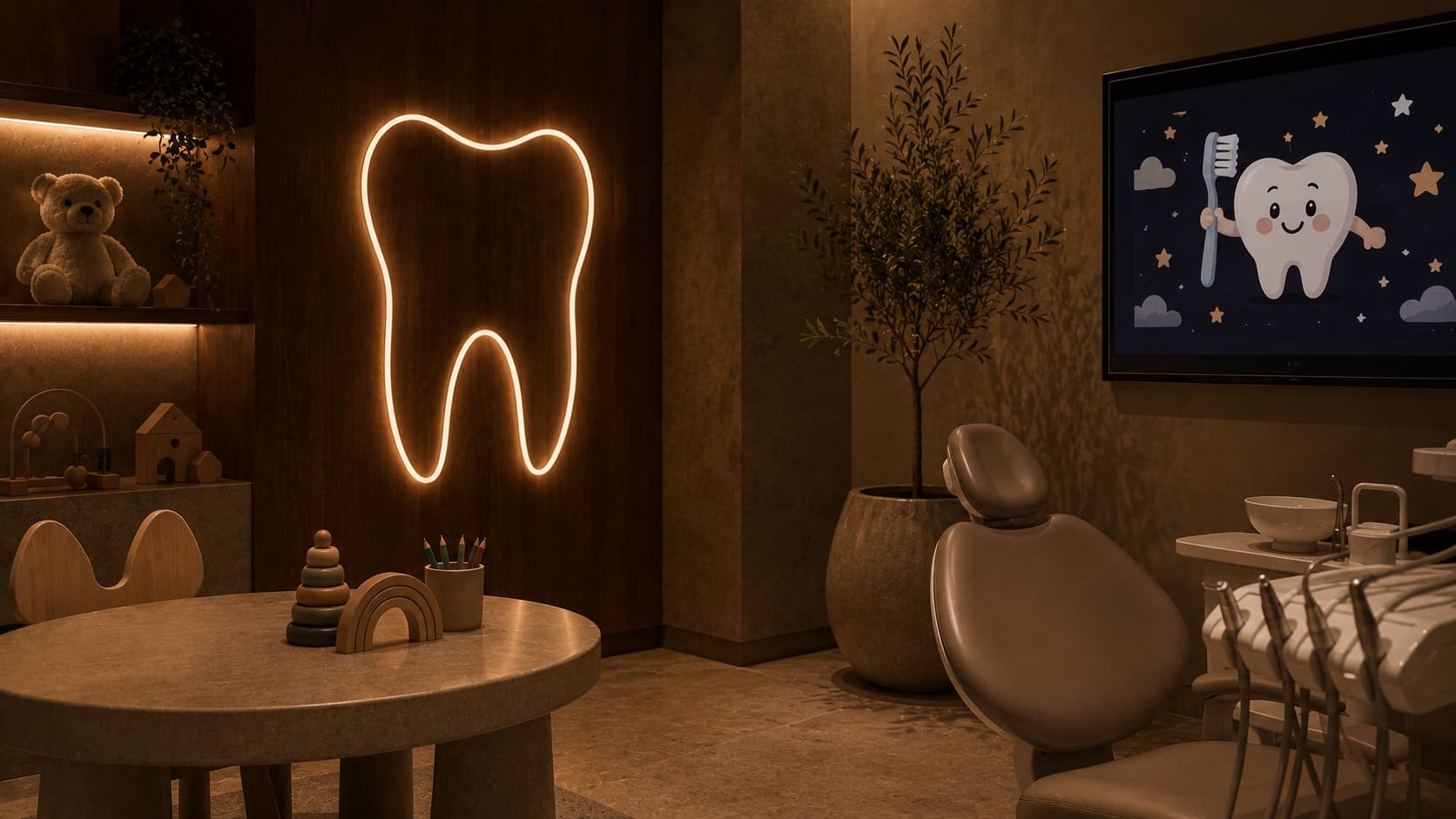
When to bring your child in.
The first dental visit should happen by age one or within six months of the first tooth. Regular care from there protects baby teeth, supports jaw development, and builds a calm relationship with the dentist before any treatment is ever needed.
- First tooth has come in or your child is approaching age one
- A six-month check-up is due
- You notice white spots, brown spots, or visible decay
- Your child has chipped or knocked out a tooth
- Persistent thumb-sucking, tongue thrusting, or mouth breathing past age four
- A baby tooth is severely decayed or broken
Six pediatric treatments.
Tap a treatment for what it's used for, how it's planned, and how it's kept comfortable.
- Best for
- Children from first tooth through age three; first-time parents wanting feeding and brushing guidance
- Planning
- No imaging required — visual exam, growth assessment, parent conversation
- Comfort
- No anesthesia needed; visit paced around the child
Ask about infant & toddler dental carePatient benefits- Catches early childhood decay before it requires treatment.
- Establishes the dentist as a familiar, friendly place — not a place of fear.
- Guides feeding, weaning, and brushing decisions with personalized advice.
- Protects primary teeth that hold space for permanent teeth and shape the jaw.
- Identifies tongue ties, bite issues, and growth concerns at the easiest age to correct them.
- Best for
- Children ages 3+; especially after the six-year and twelve-year molars come in
- Planning
- Routine visual exam; no imaging required
- Comfort
- Painless — no anesthesia, no drilling
Ask about fluoride & sealantsPatient benefits- Significantly reduces cavity risk in molars (sealants).
- Strengthens enamel and reverses early white-spot decay (fluoride).
- Painless — no drilling, no needle, no anesthesia.
- Lasts five to ten years with normal wear.
- Among the most cost-effective treatments in dentistry.
- Best for
- Children with dental anxiety, strong gag reflex, or needing longer treatments like fillings or crowns
- Planning
- Medical history review; no fasting required
- Comfort
- Nasal mask only; child stays awake and responsive throughout
Ask about laughing gas sedation for childrenPatient benefits- Reduces anxiety and helps the child sit still for treatment.
- Adjustable in real time — sedation level matched to the child.
- Wears off in minutes after the mask is removed.
- No lingering grogginess and no fasting required beforehand.
- Safe for routine fillings, cleanings, and extractions.
- Best for
- Baby teeth too damaged for a filling but still important to keep — front teeth and visible molars
- Planning
- Visual exam plus X-ray to assess remaining tooth structure
- Comfort
- Local anesthesia with computer-guided injection; laughing gas on request
Ask about zirconia crowns for baby teethPatient benefits- Looks like a natural tooth — no metallic appearance.
- Preserves the baby tooth so it holds space for the permanent tooth.
- Restores chewing function and supports speech.
- Biocompatible — safe for children's tissues.
- Done in a single visit under local anesthetic.
- Best for
- Children aged 4+ with persistent habits affecting tooth alignment or jaw development
- Planning
- Bite and jaw evaluation; photos and X-rays if needed
- Comfort
- No anesthesia; appliances are smooth and child-friendly
Ask about oral habit treatmentPatient benefits- Corrects bite and jaw development before orthodontics is needed.
- Reduces the chance of speech and swallowing issues.
- Prevents long-term changes to facial growth like open bite or narrow palate.
- Builds the child's confidence as the smile develops normally.
- Less invasive and less expensive than treating the problem later.
- Best for
- Children with dental injury from falls, sports, or accidents
- Planning
- Urgent exam with X-rays to assess injury and root health
- Comfort
- Computer-guided local anesthetic; laughing gas if needed
Ask about pediatric emergency trauma carePatient benefits- Same-day appointments for dental trauma.
- Maximizes the chance of saving a knocked-out permanent tooth.
- Prevents infection and long-term damage to the developing adult tooth.
- Restores appearance and function quickly.
- Calm, child-paced care during a stressful moment for parents too.
Planned with precision. Performed with care.
At Madeel, pediatric visits are paced for the child, not the schedule. A first visit is short and friendly — a count of the teeth, a fluoride coat, a conversation with parents about brushing, feeding, and habits. If treatment is needed, we explain what we are doing in plain language, use computer-guided anesthesia to minimize the injection sensation, and offer laughing gas when anxiety or procedure length warrants it. For complex cases — long visits, multiple procedures, or children who cannot cooperate due to age, anxiety, or medical conditions — general anesthesia is delivered by certified anesthesia specialists, with the child's breathing, heart rate, and oxygen levels monitored continuously throughout.
Calm-first visits
Every appointment is paced around the child — short, age-appropriate explanations, no surprises. The first visit is usually a ride in the chair, a count of the teeth, and a fluoride application. Trust is built before treatment.
Prevention over repair
Fluoride, sealants, and six-month exams catch problems early — when they are small, painless, and inexpensive to fix. Most children at Madeel never need a filling.
Computer-guided numbing
When a procedure does need anesthesia, a computer-controlled device delivers it slowly and steadily. The pinch and pressure of a traditional injection are largely removed.
Laughing gas on request
Nitrous oxide is available for anxious children or longer procedures. It wears off in minutes and the child leaves alert.
What to expect, step by step.
- 01
First visit — gentle exam, count of erupted teeth, parent conversation about brushing and feeding.
- 02
Cleaning and fluoride — soft polish and a fluoride varnish to strengthen enamel.
- 03
Sealants on molars when the permanent six-year and twelve-year molars come in.
- 04
Treatment of any decay using computer-guided local anesthetic, with laughing gas if requested.
- 05
Habit and bite review — flagging thumb-sucking, tongue thrusting, or crowding for early intervention.
- 06
Six-month recall — most children only need short preventive visits twice a year.
Why early dental visits matter.
Children who see a dentist before age two have measurably fewer cavities, less anxiety as teenagers, and a lower lifetime cost of dental care. Primary teeth are not disposable — they hold the shape of the bite and the space for the adult teeth that follow.
- Catches decay early, when it is small and painless to fix.
- Protects primary teeth so permanent teeth come in correctly aligned.
- Builds a positive association with the dentist that lasts into adulthood.
- Guides healthy oral habits — brushing, diet, thumb-sucking, mouth breathing.
- Identifies bite, jaw, and airway issues during the years they are easiest to correct.
Not sure which treatment you need? Talk to a specialist on WhatsApp →
Common questions.
Direct answers to the questions patients ask before booking — pain, sedation, recovery, and the steps from consultation to result.
By age one, or within six months of the first tooth coming in — whichever happens first. The first visit is short and gentle. We look at the gums and teeth, talk with you about brushing and feeding, and answer questions. There's no treatment unless something is actively wrong.
Yes. Baby teeth hold the space for adult teeth and guide them into position. If a baby tooth is lost or pulled too early, the adult tooth can come in crooked or get blocked. They also matter for speech, chewing, and the shape of your child's face as it develops.
We pace the visit around the child. First visits often involve no treatment at all — just sitting in the chair, counting teeth, getting comfortable. For treatment that does need to happen, we offer laughing gas, which is gentle and wears off in minutes. If anxiety or the complexity of the case calls for it, general anesthesia is available, delivered by certified anesthesia specialists who monitor the child throughout.
Yes, in the small amounts used for varnish at the dentist and the rice-grain-sized smear of fluoride toothpaste recommended for children under three. Fluoride is the single most effective tool we have for preventing decay in primary teeth.
Every six months for most children. If your child is at higher risk for cavities — high-sugar diet, special needs, or a history of decay — we may suggest more frequent visits.
Find the tooth and pick it up by the crown, not the root. Rinse it gently in milk, saline, or your child's own saliva — not tap water. If you can, place it back in the socket and hold it there. If not, store it in milk and come in immediately. The first hour matters most.
Possibly — but most orthodontic issues are easier to address if we catch them early. From age seven onward we watch jaw and bite development at every visit and refer to orthodontics when the timing is right. Many issues can be prevented or simplified by addressing oral habits and growth early.
Yes. For complex pediatric cases — long visits, multiple procedures in one session, severe anxiety, behavioural challenges, or medical conditions that prevent cooperation — general anesthesia is delivered by certified anesthesia specialists at Madeel. The child is fully asleep and unaware, with breathing, heart rate, blood pressure, and oxygen levels monitored continuously. For routine treatment we use computer-guided local anesthesia, with laughing gas (nitrous oxide) for anxiety relief; both keep the child awake and responsive.
The next step is a conversation.
Send a message, share what's going on, and we'll take it from there.
Prefer to call? +971 50 177 9179