
TMJ Treatments
Care for jaw pain, clicking, grinding and snoring — diagnosed properly, treated conservatively.
- Comprehensive Assessment
- Digital Imaging When Needed
- Personalized Treatment Plan
- Transparent Recommendations
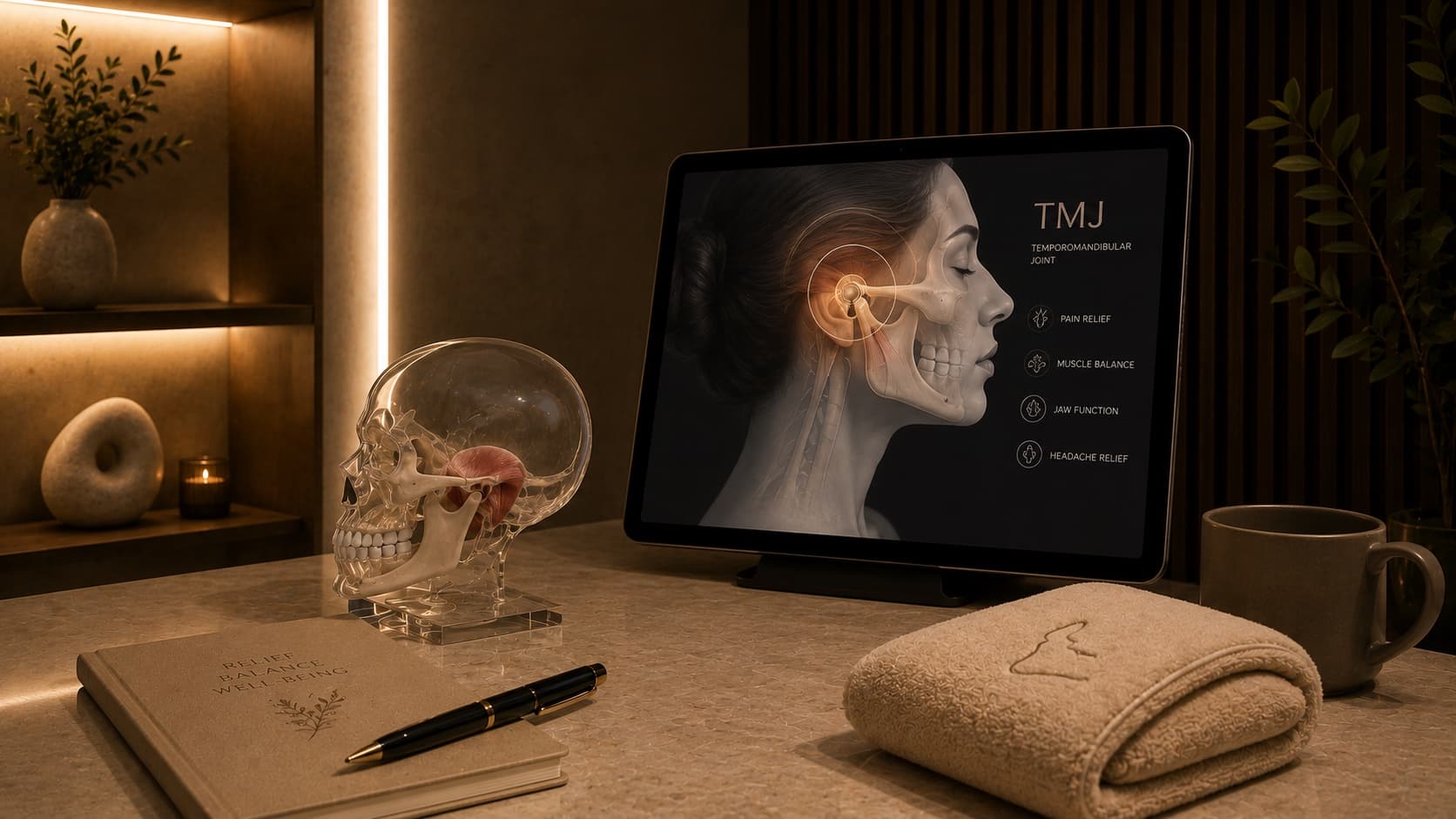
When to ask about your jaw.
Jaw problems rarely appear out of nowhere. Most patients arrive after months of waking up with a sore jaw, hearing a click when they chew, or being told they grind their teeth at night. We treat the symptoms you came in for, and look for the bite or habit behind them.
- Jaw pain or tenderness when chewing or yawning
- Clicking, popping or locking when opening the mouth
- Headaches or facial tension on waking
- Worn, chipped or sensitive teeth from grinding
- Snoring loud enough to disturb a partner
- A bite that feels uneven or has shifted
Four TMJ treatments.
Tap a treatment for what it's used for, how it's planned, and how it's kept comfortable.
- Best for
- Worn, chipped or sensitive teeth from bruxism; jaw soreness on waking
- Planning
- Bite exam, photos of wear pattern, impressions of both arches
- Comfort
- Non-invasive; no anesthesia needed
Ask about nightguard for grinding & clenchingPatient benefits- Protects enamel from further wear.
- Reduces morning jaw and head soreness.
- Quiets the sound of nighttime grinding.
- Lasts years with proper care.
- Best for
- TMJ joint pain, clicking, muscle tension headaches
- Planning
- Full bite analysis, joint exam, imaging if indicated
- Comfort
- Non-invasive; worn full-time or nights only depending on case
Ask about occlusal splint for jaw painPatient benefits- Reduces joint and muscle pain.
- Stops clicking in suitable cases.
- Improves jaw range of motion.
- Reversible — the splint can be removed if the diagnosis changes.
- Best for
- Snoring, mild to moderate obstructive sleep apnea, CPAP intolerance
- Planning
- Sleep history; sleep study coordinated with a physician before fitting
- Comfort
- Non-invasive; takes 1–2 weeks to adapt to wearing overnight
Ask about snoring & sleep apnea appliancePatient benefits- Reduces snoring volume and frequency.
- Opens the airway in mild to moderate apnea.
- Easier to travel with than a CPAP machine.
- Custom fit; titratable to find the right jaw position.
- Best for
- Reduced mouth opening, stiffness on waking, post-injury jaw restriction
- Planning
- Range of motion measurements, muscle assessment, joint exam
- Comfort
- Non-invasive; some exercises uncomfortable at first
Ask about jaw therapy for limited openingPatient benefits- Measurable improvement in jaw opening.
- Reduced stiffness and discomfort.
- Makes chewing, speaking and dental care easier.
- Avoids unnecessary intervention when conservative care works.
Planned with precision. Performed with care.
We avoid one-appliance-fits-all. A nightguard for grinding is different from a splint for joint pain, which is different from a mandibular advancement device for snoring. We take impressions, photos and bite records, and where airway is involved, we coordinate with a sleep physician before fitting an appliance.
Bite analysis first
Before fitting any appliance, we examine how your teeth meet, where your jaw rests, and which muscles are doing too much work.
Conservative first
Splints, jaw exercises and habit changes resolve most cases. Restorative or surgical options are last, not first.
Custom appliances
Nightguards, occlusal splints and mandibular advancement devices are all custom-made from your impressions — not off-the-shelf.
Sleep coordination
For suspected sleep apnea, we work alongside sleep physicians. Oral appliances are part of the answer, not a substitute for diagnosis.
What to expect, step by step.
- 01
History — pain pattern, sleep, stress, previous dental work.
- 02
Clinical exam — jaw range of motion, muscle tenderness, joint sounds, bite contacts.
- 03
Imaging if indicated — panoramic, CBCT, or photos of tooth wear.
- 04
Diagnosis and plan — which appliance, which therapy, what we are treating.
- 05
Impressions taken for custom appliance fabrication.
- 06
Delivery appointment 2–3 weeks later with fit adjustments.
- 07
Follow-up at 4–6 weeks to confirm symptoms are settling.
Why early TMJ care matters.
Untreated grinding wears enamel down in a way that cannot be reversed. Joint problems left alone can progress from clicking to limited opening. The earlier the cause is identified, the more options stay on the table.
- Reduces jaw pain, headaches and facial tension.
- Protects teeth from grinding wear and fractures.
- Improves sleep quality and reduces snoring.
- Restores comfortable jaw movement.
- Catches bite problems before they cause restorative damage.
Not sure which treatment you need? Talk to a specialist on WhatsApp →
Common questions.
Direct answers to the questions patients ask before booking — pain, sedation, recovery, and the steps from consultation to result.
Not always. A click without pain or locking is common and often does not need treatment. A click with pain, limited opening, or one that has changed recently is worth a proper exam.
Off-the-shelf guards do not fit your bite accurately and can shift teeth over time. For occasional, light grinding they may be acceptable short-term. For anything more, a custom guard fits better, lasts longer, and protects without altering your bite.
It depends on the cause. Many muscle-driven cases settle well with a splint and habit changes. Joint-driven cases may need additional treatment. We will tell you what to expect after the diagnostic appointment, not promise a cure upfront.
Not necessarily, but loud snoring with daytime fatigue, witnessed breathing pauses, or morning headaches needs a sleep study. Snoring alone is treatable with an oral appliance. Apnea needs a confirmed diagnosis first.
Yes. Enamel does not regrow. Heavy grinding over years can flatten, chip and crack teeth, and can shorten the lower face. A nightguard does not undo damage already done, but it stops the wear from continuing.
For mild to moderate sleep apnea, oral appliances are a recognised alternative — especially for patients who cannot tolerate CPAP. For severe apnea, CPAP usually remains first-line. The sleep physician's recommendation guides the choice.
Most therapeutic splints are worn full-time for the first few weeks, then nights only as symptoms settle. Some patients move off the splint entirely; others continue with night wear to protect against grinding.
The next step is a conversation.
Send a message, share what's going on, and we'll take it from there.
Prefer to call? +971 50 177 9179